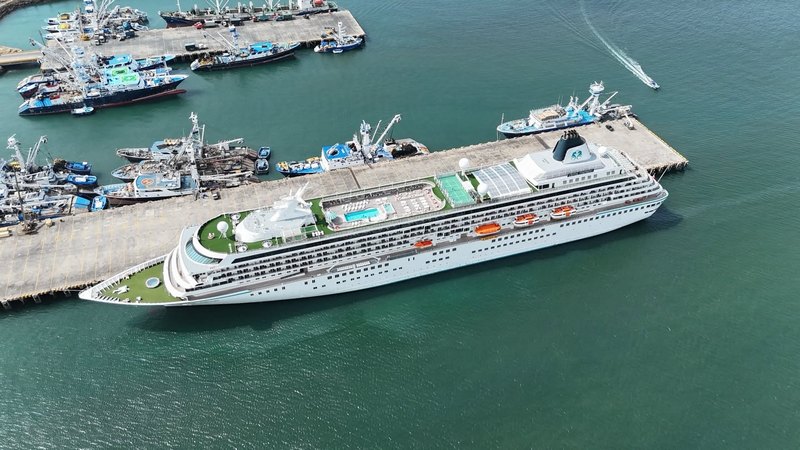
This Family Walked Off Their $3,400 Cruise After Just 17 Hours and Never Looked Back
Jared and his family paid $3,400 for a four-day Princess cruise from Galveston. After 17 hours on board, they grabbed their luggage and walked off the ship. His Midwestern family, who rarely complains about anything, agrees it was one of the best decisions they ever made.
Would you have done the same thing? Let’s walk through what happened and why this choice made perfect sense.
This site contains affiliate links for which we may be compensated.
The Dream Vacation That Turned Into a Nightmare
Jared invited his parents to join him and his wife on a four-day cruise aboard Princess Cruises‘ Regal Princess. The family lives 90 minutes from Galveston, so they could drive instead of flying. His parents flew in from out of state for this special trip.
Total cost was about $4,000 for four people sailing to Cozumel, Mexico. They chose Princess because they’d sailed with the line before, including a Panama Canal cruise for his parents’ 40th wedding anniversary.
Princess is considered a premium cruise line, a step up from Carnival. The family expected quality food, good service, and relaxing days together. This mattered especially because Jared’s parents are in their 70s and live 2,000 miles away. They only get a handful of days together each year.
Everything Went Wrong From the Start
The night before departure, an oil spill occurred in the Port of Galveston. The Coast Guard closed the area around their ship’s pier for cleanup around 9:50 p.m.
Regal Princess was finishing a transatlantic repositioning cruise and arrived the next morning. It docked in the closed area. When the family boarded around 2 p.m. on October 29th, they received a letter saying cleanup was underway with an expected departure around 7 p.m.
Disappointing, but anyone who cruises knows itineraries can change. Then things got much worse.
Stuck in Port With Nothing to Do
Because the ship remained stuck in port in Galveston, local Texas laws kicked in. Shops closed, casinos closed, and bars operated under severe restrictions.
Jared and his wife purchased the Princess Premium package at around $100 per person per day. This included premium cocktails, specialty coffees, and fresh juices. His parents bought the Plus package at about $60 per day.
Instead of premium drinks, here’s what was available while docked in Texas:
- Two types of canned beer at $13 each with tax and tip
- Frozen drinks for about $17
- Wine by the glass ranging from $20 to $23
- No specialty coffees
- No premium cocktails
- Nothing covered by their packages
When Jared asked guest services about compensation for the non-functional packages, they told him the package still worked because he could get fountain sodas for his $100 a day.
The Food Was Worse Than Expected
The food quality fell shockingly short of previous Princess experiences. Jared describes it as “less than Olive Garden quality” but “if it eliminated soup, salad, and bread sticks and added a $55 cover charge.”
The family couldn’t leave the ship to explore Galveston even though they were tied up at the dock. They wondered if they were eating leftovers from the previous transatlantic voyage. Each family member concluded it was the worst meal across dozens of cruises on various cruise lines.
Other passengers nearby said the same thing. “Well, maybe breakfast will be better tomorrow.”
The Captain’s Announcement Made Everything Worse
Around 9:00 p.m., the captain announced the oil spill wasn’t resolved. Cleanup would continue the next morning during daylight hours. They wouldn’t leave until sometime on day two with no specific timeline.
Worse yet, they would no longer visit Cozumel, the only port on their four-day itinerary. Instead, they’d sail to an unnamed Mexico port where passengers couldn’t disembark. They’d just dock briefly to satisfy maritime regulations for a foreign flag vessel, then return to Galveston.
The cruise director came on stage immediately after that announcement. He said, “I am not joking that we should all feel grateful because at least the captain’s announcement wasn’t that somebody fell overboard or died.”
That was the bar the cruise director set for success.
Princess Offered a Choice With Unequal Compensation
After 10 p.m., a letter arrived in their stateroom. This is where things got really interesting from a psychology standpoint.
The letter gave them a choice: stay on the cruise or leave the next morning between 7 and 9 a.m. if they notified guest services by midnight. They had 90 minutes to decide.
The compensation structure was designed to influence their choice:
If you stayed on the ship:
- One day of cruise fare refunded (25% to original payment method)
- One day of beverage package refunded (25% of cost)
- 50% of base fare as future cruise credit
- Total compensation: 75-80%
If you left the ship:
- 25% of base fare as future cruise credit only
- Zero cash refund
- Zero beverage package refund
- Total compensation: less than 25%, all in future cruise credit
Same cruise, same failed day one, same canceled port. But leaving meant a 3-to-1 penalty in compensation. Plus, they had to carry their own luggage with no porter service.
Why Princess Structured Compensation This Way
Jared analyzed Carnival Corporation’s financial reporting. They earn about $80 per day per passenger in ancillary revenue from bars, casinos, shops, spa services, specialty dining, and shore excursions.
If passengers left, they represented zero chance for additional revenue. Princess kept all their money for services they failed to deliver.
If passengers stayed, they were three more days of potential spending. With an extra sea day keeping shops and casinos open, that’s about $960 in additional revenue opportunity for a family of four.
The compensation structure wasn’t designed to be fair. It was designed to maximize revenue extraction while making passengers feel they were choosing rationally.
Three Psychological Traps That Almost Worked
Trap #1: The Sunk Cost Fallacy
The family already paid $3,400. That money was gone whether they stayed or left. But our brains scream, “You’ve already spent so much money, you have to stay and get your money’s worth.”
Other passengers said it constantly: “Sure, this sucks, but I paid for this trip. I’d better make the best of it.”
Reality? That money is already gone. The only question that matters is how do you want to spend the next 72 hours?
Trap #2: The Double Spending Illusion
The future cruise credit seems like free money. You’ve already paid for the next cruise, right? It’s sitting in your account.
But it’s not free. You paid for it with this subpar experience. Now you’re locked into giving Princess another chance while spending more money on flights, excursions, gratuities, and drinks not covered by the credit.
You’re not saving money. You’re double spending once for the bad cruise and again for the “free” cruise that isn’t really free.
Trap #3: Responsibility Shifting
By giving passengers the choice to leave, Princess transferred responsibility for the failed vacation from them to the passengers.
If you stayed and had a terrible time, you’d spend three days thinking you should have left. Every bad meal becomes your fault. Every disappointment becomes your responsibility because you chose to stay when you had the option to walk away.
Princess gets off the hook. You blame yourself.
The Question That Changed Everything
Jared asked himself a different question to break through those psychological traps:
“Ignoring all the money we already spent because it’s gone no matter what, how do we want to spend the next 72 hours together?”
Not how do we maximize our refund or avoid wasting money. Just how do we want to spend our time?
Here’s the reality that mattered: His parents are in their 70s. They live 2,000 miles apart. They have limited vacation time. Realistically, they might have 100 days of potential vacation time left together if they’re lucky.
This cruise represented four of those 100 days. That’s 4%.
The real question became: Do we want to spend 4% of our remaining vacation time together trapped on this ship? Cataloging every new disappointment? Trying to convince ourselves it’s not that bad because we spent so much money?
Or do we want to spend that 4% creating actual memories we value?
When you frame it like that, $3,400 becomes irrelevant. You can’t create more days with your parents. The money is a sunk cost. But time is the ultimate limiting resource.
What They Did Instead
At 11:45 p.m., they informed guest services they’d be departing the next morning. They didn’t sign anything accepting the 25% future cruise credit. They simply said, “We’re out.”
At 7:30 a.m. on October 30th, they walked off, dragging their luggage from a cruise ship that never moved.
They turned a failed vacation into a Best of Texas experience:
First stop: Buc-ee’s for breakfast burritos and sandwiches that were better than any food on the ship.
Lunch: Texas barbecue from Roze Meyers, a local food truck with a Michelin star. Brisket, ribs, three kinds of sausages, all their sides. His parents couldn’t believe what real barbecue tasted like.
Perry’s Steakhouse for pork chop Friday. Massive pork chops with homemade applesauce. Jared’s mom later declared it “the best meal of her life.”
Jared made a run to Total Wine and opened the homemade bar. Frozen margaritas, ice-cold beer, wine of their choice. He spent three days making top-shelf drinks instead of paying $17 for frozen cocktails.
They watched movies, talked, laughed, and played games. His parents got to actually relax in their home and hang out with their grandkids instead of being trapped on a ship hoping the next meal would be better.
Every positive experience they had was because they chose to leave.
Did They Ever Get Their Money Back?
Short answer: No. Jared sent a formal complaint letter to Princess the next day. He got back a generic response saying no further compensation would be issued beyond what was offered on board.
He followed up but received no further response. His credit card company might help, but probably not.
Is he frustrated about it? Absolutely. But he’s made peace with it.
The real win was those irreplaceable days with his family. For $3,400, he got three days with his parents, celebrated their 49th wedding anniversary together, and gave his mom the best meal of her life. He got the freedom to choose how he spent his time.
Tips for When Your Cruise Doesn’t Go as Planned
1. Recognize the sunk cost fallacy in action. Money you’ve already spent is gone. Don’t throw good time after bad money trying to justify past spending.
2. Ask the right question. Don’t ask “How do I maximize my refund?” Ask “How do I want to spend my remaining time?”
3. Watch for manipulative compensation structures. If staying gets you 3x more compensation than leaving, the company wants you to stay for their benefit, not yours.
4. Be wary of future cruise credits. They’re not free money. You paid for them with a bad experience, and they lock you into spending more with the same company.
5. Don’t let companies shift responsibility to you. Just because they offered you a choice doesn’t mean future disappointments become your fault.
6. Consider what really matters. Time with loved ones, especially older family members, is irreplaceable. Money can be earned again. Time cannot.
7. Walk away when it makes sense. Sometimes the best decision is cutting your losses and taking control of your vacation.
Would You Have Done the Same Thing?
This is the big question. Jared’s family walked away from most of their $3,400 investment after just 17 hours. They got less compensation by leaving. They carried their own luggage off like fugitives.
But they also got to spend quality time together on their own terms. They ate amazing food, made drinks they wanted, and created positive memories instead of cataloging disappointments.
The sunk cost fallacy whispers that walking away means all that money is wasted. But Jared argues the opposite. Staying would have wasted something far more valuable: irreplaceable time with his aging parents.
Here’s my question for you: Would you have stayed on that ship for the better compensation? Or would you have walked off and reclaimed control of your vacation?
There’s no universally right answer. It depends on your priorities, your situation, and what matters most to you. But Jared’s story reminds us that sometimes the best time to walk away from a bad decision is right now.
What would you have done? Share your thoughts in the comments below. And if you’ve ever faced a similar cruise disaster or sunk cost decision, I’d love to hear how you handled it.
Cruise Walk-Off Update – Privilege, Sunk Cost, & Regret
Jared has posted an update on December 18, 2025 responding to comments and questions about his experience. You can find the full video below: